Type: Transformable GRP Structure
Location: Hannover, Germany
Year: 2024
Status: Design + Fabrication
Principal Investigators: Zongshuai Wan, Eike Schling, Kristof Crolla
Office: The University of Hong Kong | HKU + Leibniz University Hannover | LUH
The project „Kinetic Asymptotic Structures“ is a collaboration between the University of Hong Kong and
Leibniz University Hannover. The project is funded by the Hong Kong Research Grants Council (RGC) and
includes the exchange of a postdoc and a doctoral student in the summer of 2024.
The research aims to develop innovative, transformable shell structures that can be applied in both urban and rural environments. By integrating architecture, geometry, and computer-aided mechanics, an adaptive structure will be created that can flexibly respond to different climatic and functional requirements.
The main goals of the project are to extend the computer-aided design workflow for four-dimensional modelling of asymptotic networks, to develop architectural applications for adaptive facade and roofing systems, and to establish a reliable material and construction strategy for lightweight, transformable structures. Another goal is the broad dissemination of research results through workshops, exhibitions, conference presentations, and scientific publications to ensure knowledge transfer into practice.


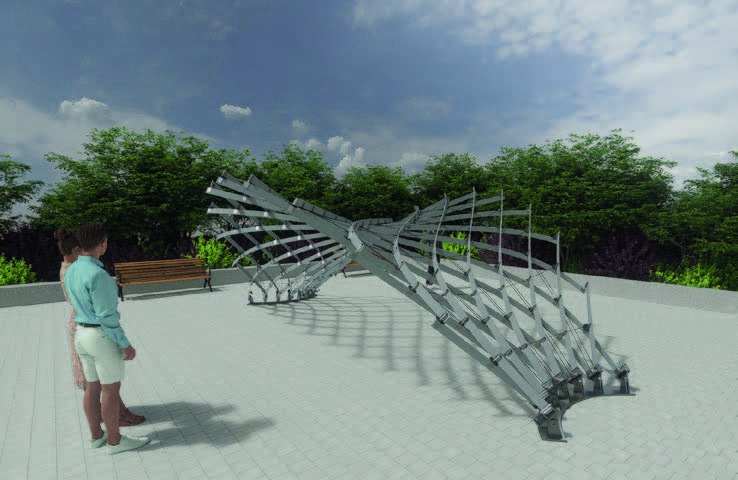
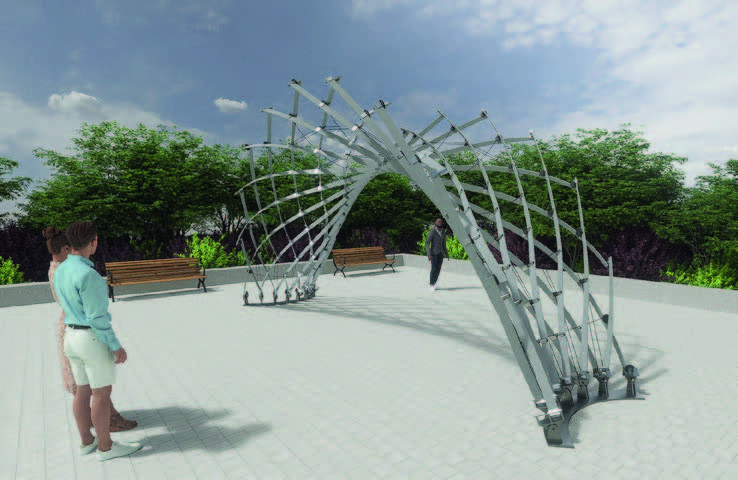
Prototyp
A central element of the research is the development and testing of a kinetic prototype. The Kinetic Canopy consists of a symmetrical lattice structure made of glass fiber reinforced plastic (GFRP) and aluminum joints that can assume various spatial configurations through elastic deformation. It demonstrates the structural performance and adaptability of this technology and serves as a basis for further investigations and applications. The project will be exhibited in Zurich during the IASS.
Construction
The construction involves the use of GFRP slats coupled with aluminum scissor joints and pulled into the desired shape with steel cables. The structure is supported on hinged steel nodes.


Digitale Simulation
Digital simulation plays a crucial role. With the help of parametric design tools, complex geometric
models and kinetic movements of shell structures are created and optimized. Algorithms are used
that allow the geometric curvature to be controlled, as well as simulate elastic stresses and structural
integrity and adaptability of the structures under various conditions. These digital models serve as a basis
for further physical development.
Physical Experiments
Physical experiments are essential to validate the theoretical models and simulations. A scale model of the „Kinetic Canopy“ is developed and tested. These tests include static and dynamic load testing to assess the structural performance, elasticity, and transferability of the prototype. Through repeated deformation and covering of the prototype, practical insights are gained that contribute to refining material and construction strategies.
 Geometry.Design.Structure
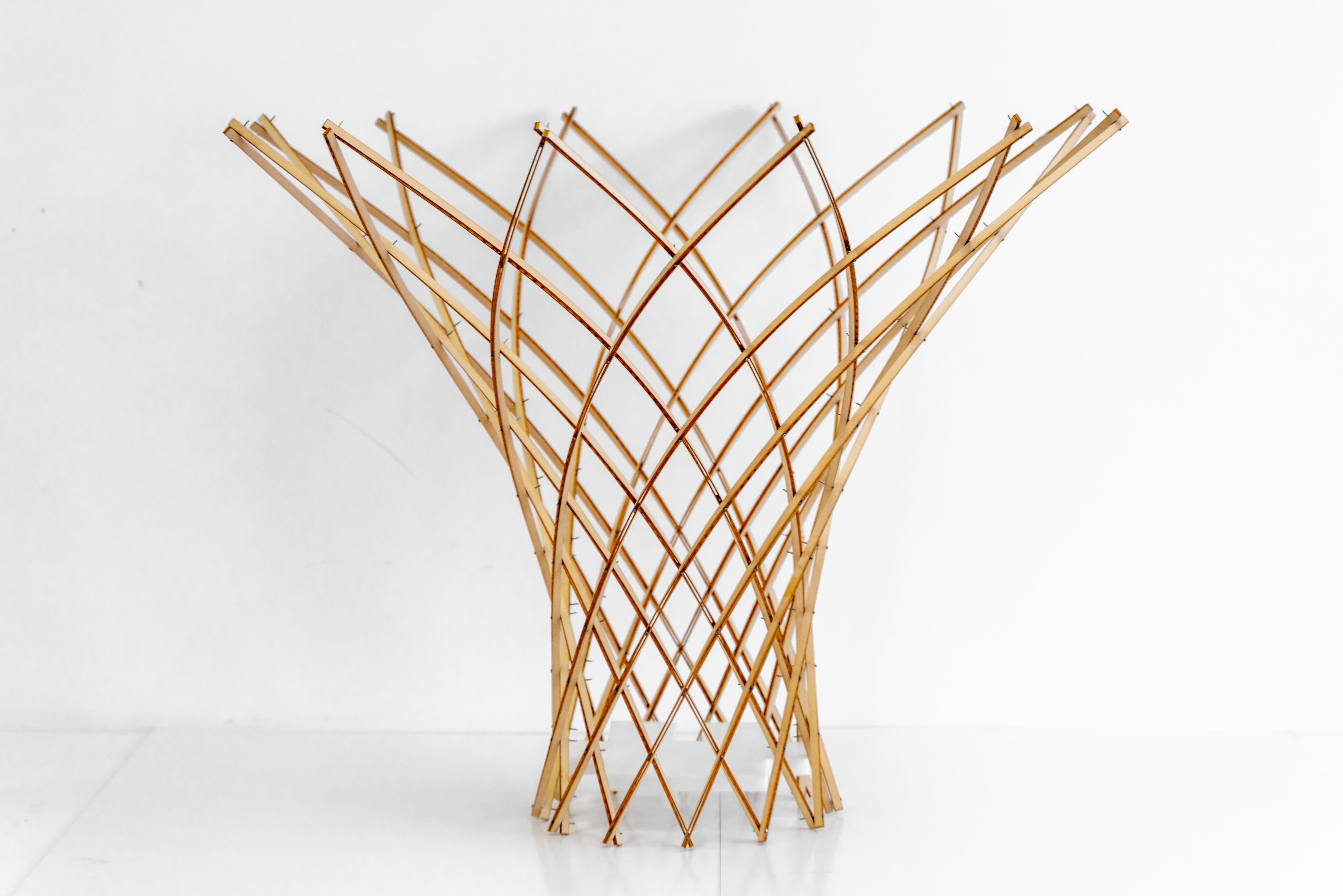
It’s truly fascinating to witness the design process of a kinetic canopy unfold. The fusion of art, engineering, and technology in this project is inspiring. I’m particularly impressed by the team’s commitment to both aesthetic appeal and functional efficiency, as evidenced by their meticulous attention to detail in material selection, structural integrity, and movement mechanics.